
Dr. Wyn Thomas is a well-known historian with a significant depth of expertise in Welsh protest movements. His landmark study on the flooding of Cwm Tryweryn offers profound insights into today’s political climate. The cultural and environmental trauma of that era directly parallels current, contentious debates regarding the industrialisation of the mid-Wales landscape by large-scale energy infrastructure in the form of wind farms and associated pylon routes. His work focuses on how communities mobilise to protect their land, heritage and identity against encroaching external forces.
Tryweryn: A New Dawn? offers a nuanced look at one of the most painful chapters in modern Welsh history: the mid-1960s flooding of the Tryweryn Valley in Meirionnydd and the drowning of the village of Capel Celyn to supply water to Liverpool. He also wrote Hands Off Wales which is an account and analysis of the militant campaigns carried out in the name of Welsh political nationalism between 1963 and 1969 and John Jenkins: The Reluctant Revolutionary? The three books form a trilogy on 20th-century Welsh political history, exploring how the defence of natural resources and communities catalysed modern national consciousness. His work stands out for breaking through romanticised myths to offer a rigorous, balanced, and evidence-led understanding of Welsh resistance.
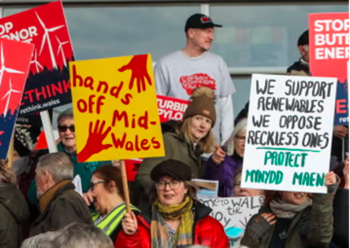
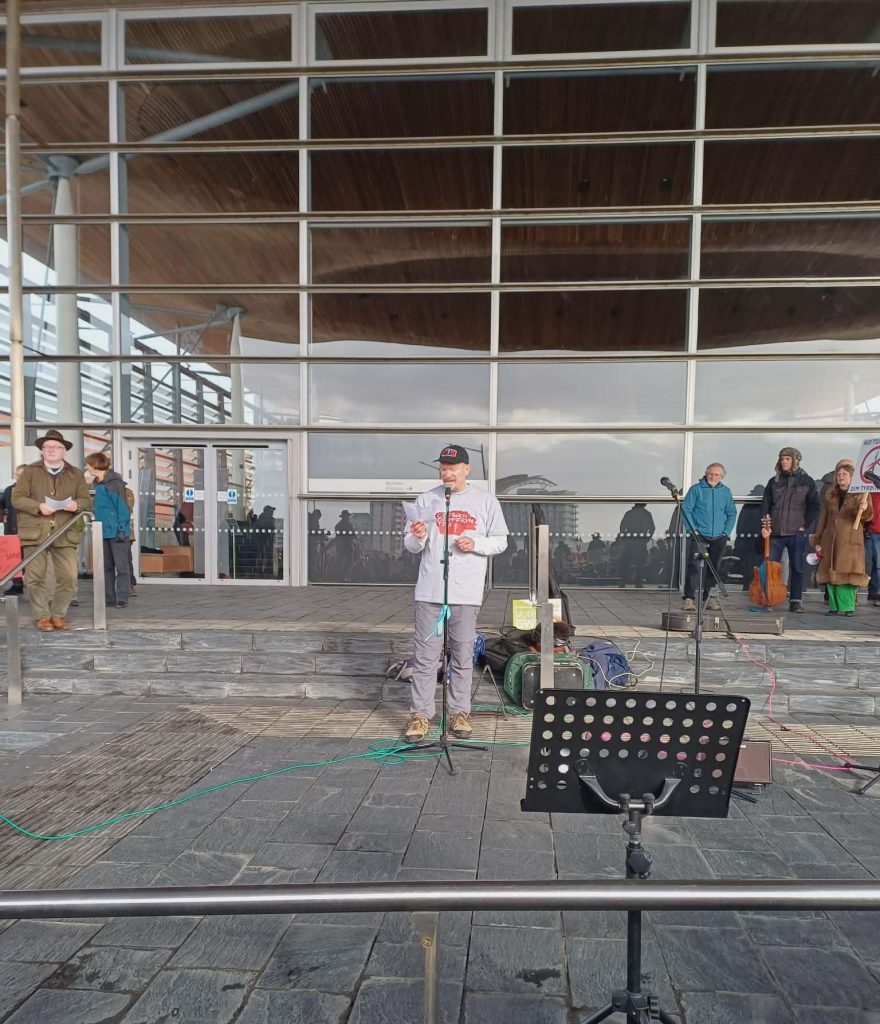
Wyn spoke passionately at the demonstration outside the Senedd in February 2026, talking about the ill-conceived and profit-driven policies that risk the industrialisation of our treasured and unique rural landscapes and the need to fight for them.
Perhaps a less well known fact about Wyn, is that he is also a highly regarded folk musician and songwriter. He perceives the landscape not just through geographic lines, but through its cultural and spiritual “song”. His knowledge of traditional Welsh poetry and folk music, ranging from the prophetic poetry (Canu Brud) of medieval bards supporting Owain Glyndŵr to the global protest movements of the 1960s folk revival, underpins his outlook. He believes the weaving of political messages into song and verse are deeply rooted in Welsh culture.

I wanted to ask Wyn about his unique vantage point on the historical relationship between music and protest: how music can act as a catalyst for community resistance and how it might be used effectively to protest against the current onslaught on our land, communities and identity from external, encroaching forces. Wyn is currently working on his third and, as yet, untitled album, along with several media and other ongoing projects.
This discussion took place via a series of emails, and the latter part of this interview is Wyn’s personal reflections on some of the questions I raised.
SL: You are renowned for having a deep love for Wales and perhaps mid-Wales in particular. So, to start at the beginning, where do you feel your love for Cymru comes from?
WT: Well, in part because I am a proud Beaker/Celt! I arrived at this belief through the declared result of a DNA test I took some years ago, which indicated Beaker ancestry on my patrilineal side, and I include Celt on the understanding that being ‘one of the original Welsh’, as I was subsequently described, I must have Celtic ancestry too. My dad had a slightly swarthy complexion and black hair (until his late 40s), which suggests to me that he had Iberian descent rather than being part of the blonde or ginger variety of Celt who settled in Wales. I’m more ginger/strawberry blonde (I suppose), so I assume there must have been some interbreeding (for want of a better term!) at some stage, hence the mix of Beaker/Celt. In the belief that people didn’t travel in the past (more of a twentieth-century development), it is highly likely that my family has lived and sheep-farmed in Maesyfed (Radnor) for some 4,000 years. On many occasions since childhood, I have walked up to the Beaker burial mounds on the hills above my grandparents’ farm and then my parents’ home nearby. I always felt strangely drawn to them. I put it down to a love of history and a heightened emotional connection to the past. Then, some 10 years ago, I received my DNA results. I felt that it explained a lot. My forebears may well have been laid to rest in these burial mounds. Additionally, they may have been involved in the construction of the original burial mounds (now cairns) that mark the summit of Drygarn Fawr (Cwm Elan), having been built by local Bronze Age communities over 3,000 years ago. So, my connection to mid-Wales extends back many centuries, to a time long before the Welsh language and the nation of Wales emerged, as well as before the United Kingdom, of course, which is a relatively recent political construct. These connections to Wales, particularly mid-Wales, suggest that as we progress through the often-turbulent pages of Hanes Cymru (Welsh History), it is highly probable that my ancestors fought for Owain Glyndŵr at the victorious Battle of Brynglas (near Tref-Y-Clawdd/Knighton) on 22nd June 1402. You see, Glyndŵr’s army during his 15th-century independence campaign relied heavily on the local populace. Owain Glyndŵr actively recruited local farmers, labourers, and rural tenants as he travelled. Why? Because local farmers, being familiar with the rugged, mountainous terrain, proved invaluable as archers and scouts. And local Welshmen flocked to his cause, swelling the ranks of his army with men who had long suffered under oppressive and punitive penal law. Intriguingly, at least to me, the site of the Brynglas battle has always held a peculiar fascination for me, while the history of the battle has always captivated me in a way I can’t quite explain, many years before I gained a more comprehensive understanding of Owain Glyndŵr’s local recruitment strategy. So, in view of all these historical connections, I enjoy a long and proud link to Cymru and Canolbarth Cymru (mid-Wales) in particular, and such a deep emotional bond gives rise to feelings of protection — which leads me to the proposed and ludicrous energy industrialisation of rural Wales.
Historical Echoes: From Water to Wind
SL: In your research on the militant campaigns of the 1960s, you’ve explored how deep-rooted feelings of injustice, such as the threat of flooding at Tryweryn, galvanised a nation. How do you see the current resistance to pylons and wind farms in mid-Wales echoing these past struggles, or are the dynamics fundamentally different?
WT: I believe that the issues are fundamentally the same.
SL: History often shows that Welsh protest movements are deeply connected to the land and the preservation of culture. How does the current movement against large-scale energy infrastructure fit into the longer historical narrative of ‘defending the heart of Wales’?
WT: It reflects the same historical argument. Namely, that the Wales we love faces a grievous threat and that what is being proposed, yet gain, will damage Wales for the benefit of those outside it. How can we write a history of what is happening now? By adopting an evidence-led approach to the information provided and analysing it with a detached and informed perspective.
<p”>SL: How can we catalogue the events, feelings and significance? How, can we apply, to quote you, ‘careful, nuanced and considered analysis’ to such a contentious and emotional subject and be accurate and truthful?
WT: By being careful, nuanced and considered when compiling and presenting the analysis. For instance, those who are in support of this infrastructure claim that it is needed owing to climate change and an historic reliance of fossil fuels, sourced from both the UK and from overseas. This they maintain cannot continue and we need to be move towards a carbon neutral and net zero and self-providing future. However, the contrary argument is that it is not in fact needed, and that when looking at the implementation of this infrastructure it counters the argument that it is ‘green energy’. How so? Well, how effective is it, the efficacy of it? Consider the following: the infrastructure is shipped from China, the materials used to construct it, the concrete required to ensure each turbine stands, the lubricant oil needed, the devastation to the landscape through transportation, etc., the short shelf life of this infrastructure (15-35 years), so, what happens to it then — bearing in mind that each is some 700 feet in height? So, what is the motivation behind its introduction? Many suggest it is being done primarily for money, that political parties, including Plaid Cymru, the nationalist party of Wales, which was established to protect Wales from such encroachments and which was recently elected to government at the Senedd election, is in support of it, along with several Welsh county councils, as they all have a financial incentive to see this infrastructure introduced. If so, is it truly required, and if it is required, is it required to the degree and the extent being proposed? A contributor to the discussion which we held recently at the Llandeilo Literature Festival argued that none of it is required, and that the opposition movement is far more widespread and cohesive than the authorities realize! The opposition is currently ‘underground’, as it were, through online and other contact. Wales’s figure in terms of its global emissions is not the 0.1%, as I was led to believe, nor is the figure 1% in UK terms. I am now led to understand that these figures are, in fact, much, much lower. I would urge people to listen to podcasts in which energy expert Kathryn Porter addresses the Labour government’s policy on ‘green energy’ and how it seeks to achieve ‘net zero’; she powerfully dismisses these claims as ill-conceived and unnecessary, claiming that ‘Wind and solar are expensive, unreliable and dangerous’.
I do not profess to be an expert regarding climate change or this infrastructure. I have not dedicated nearly as much time to researching this subject as I did when gathering information for my PhD and my books. However, on the basis of what I have seen, read and heard, the proposal is fundamentally flawed from a scientific, engineering and environmental perspective. The only aspect of the proposal to introduce this infrastructure that stands up to scrutiny is that it is being undertaken for financial reasons. So, if we accept that it is being supported by the political parties in government, namely Plaid Cymru at the Senedd and Labour in Downing Street (along with several Welsh county councils), because they will receive a financial injection, we also need to be aware that the enactment of the proposed energy industrialisation of rural Wales will come at great cost to the people directly affected and the Welsh nation as a whole. I cannot then conceive that such a policy is anything other than disgraceful and remarkably short-sighted.
SL: Does the recent Senedd election result give opponents of the proposals hope that they will fail?
WT: Yes, I think it does. I remain cautiously optimistic that sense will prevail and that we will achieve the best outcome. I am encouraged by the recent announcement of Adam Price, MS, being appointed as the new Cabinet Minister for Enterprise, Connectivity and Energy for the Welsh government. Adam has previously voiced concerns regarding the potential impact of this proposed policy on rural Wales. He has recently reiterated that Plaid Cymru remains committed to fulfilling its manifesto pledge concerning the introduction of this infrastructure. Although many individuals within the targeted region, and indeed beyond, believe that the newly elected Plaid Cymru government is overly committed to implementing this contentious policy, there is a pressing need for a comprehensive assessment to establish the true situation first.
The Power of the Song: Music as a Catalyst for Resistance
SL. I want to move on to the power of music as a tool for protest. From a historian’s perspective, how effective has music been historically in Wales at mobilising communities and building a sense of collective identity during times of crisis?
WT: Protest music has historically defined injustice and fuelled social change, evolving from 18th-century anti-slavery chants and labour anthems into a mainstream tool for political commentary. Key eras include 1940s-50s folk, the 1960s Civil Rights movement, and subsequent punk, rock, and hip-hop, highlighting issues like war, inequality, and racism. I talk more about this in my personal reflections.
SL: There are some groups who are trying to use art, music, film to try to express the broader cultural expression of “belonging” and need to protect the environment. How do they fit with the campaign groups who are all coming at the issues from slightly different perspectives?
WT: They can all offer a different, but essentially the same message.
<p”>SL: As a musician, you know that songs can articulate emotions that standard political rhetoric often misses. In the context of mid-Wales, do you think music can become a prominent medium for expressing opposition to these developments?
WT: Yes, if it is done well. For example, the Live Aid-style concert idea that has been suggested would be an effective means of engaging the mid-Wales audience and furthering the message of opposition.
SL: When musicians collaborate to write protest songs, like ‘Shame’ by Marshal and the Hats, what, if anything, does that process do for the cohesion and morale of a community that feels powerless in the face of external developers and little or no help from their elected government.
WT: If provides a collective focus. It serves as an effective reminder that people are not alone and that when people unite over a common cause, they can make a significant difference and ensure that a desired outcome is reached.
SL: We often hear about the ‘protest song’ as a relic of the 60s, do you think we are seeing a resurgence in mid-Wales? Is there a specific quality to Welsh music, does the tradition of the cân werin (folk song) make it uniquely suited for this kind of local, grassroots resistance?
WT: For centuries, song and poetry have played a pivotal role in the expression of Welsh political thought. The weaving of political messages into song and verse are deeply rooted in Welsh culture.
Medieval itinerant bards (beirdd clere) and the higher-ranking professional poets of Wales wrote substantial amounts of verse that functioned as political and cultural protest, notably, reacting to the loss of independence and the imposition of English rule.
While the “500 bards” executed by Edward I islargely considered legend popularised by 19th-century literature, medieval Welsh poets did face severe restrictions and used their art to resist cultural assimilation, often using prophecy and understated satire to promote Welsh identity. I talk more about this in my personal reflections.
SL: As a historian, you know how these stories eventually settle into the history books. How do you ensure that any ‘cultural’ response, the music and the creative resistance, isn’t forgotten, and that it sits alongside the economic and political facts of the debate?
WT: By making that artistic expression as effective and as engaging as possible. Namely, simple but effective. The refrain, ‘Shame, Shame, Shame, Shame!’, is a good case in point.
SL: Is there something a song can do that a planning objection or a petition simply can’t? How does a melody change the way a community carries the weight of a protest?
WT: A well-crafted song or poem can touch upon human sensitivity and intellectual understanding in a more emotional way; they resonate more strongly and more deeply than, say, a petition, which does have its place, though, of course, in getting the message across as to the degree of opposition.
SL: You’ve spent your career documenting the ‘power of protest’ in Welsh history. If you were writing a soundtrack for the current struggle in mid-Wales, what would the tempo be? Is it a song of defiance, a lament for the land, or something else?
WT: It’s both and more — it is a song that outlines that we have been here before and that Wales is under attack yet again. It laments the passing of a Wales we all know and love should we fail, and it reiterates the message that whenever Wales is attacked, there are always those who ‘step up’ and defend it.
The Intersection of Identity and Landscape
SL: The landscape of mid-Wales isn’t just physical; it is culturally and spiritually significant to the people who live there. How does music help translate the mixture of loss, bewilderment and anger people are feeling, into a coherent public message that resonates beyond the local area?
WT: People need to be informed that these ‘findings’ are strongly contested. Moreover, the issues involved, however distant in a geographical sense, are important to them. That we all suffer, ultimately. Take, for example, the hedgerow at Nant Mithil, which was subject to a study through carbon testing. The results revealed that the carbon trapped at the base of the hedgerow indicated that it was first planted 3,000 years ago. To lose something so culturally valuable would be a travesty.
SL: There is a tension between the need for renewable energy and the preservation of rural landscapes. How can music bridge that gap, or does its primary role lie in giving a voice to the voiceless who feel their perspective on that ‘transition’ is being ignored?
WT: I firmly believe that music, particularly a well-crafted song — which I consider to be a form of poetry — can effectively convey the message that the current proposals are harmful and, in every respect, do not represent ‘green energy’.
SL: You’ve mentioned that for you, music and history both touch you in a way that is ‘almost spiritual’. How do these two halves of your life, the rigorous analytical historian and the creative songwriter, inform each other when you look at current events in the Welsh countryside?
WT: I believe that both aspects of my life — the evidence-led historian and the sentient songwriter — are once again infused with inspiration. But why is that? It is because they are once more closely intertwined, tapping into the same primal instinct. This highlights the notion of art reflecting or mirroring life, and so forth.
SL: If we look back at this current period in twenty or thirty years, what role do you think any cultural response, the art, the music, and the poetry of these protests, will play in how we remember this era of environmental transition?
WT: Hopefully, it will be recognised that artistic expression played a crucial role in raising awareness of the issues among a wider audience and was key in ensuring the proposal was defeated. All culminated in seeing that common sense prevailed.
Navigating the Split: Identity, Landowners and Newcomers
<p”>SL: I want to talk a little bit about the Tryweryn video and the section where you describe people living in the land for generations, tribal, ‘my little bit of the world’ and better lives for one set of people at the cost of others. Are there any parallels here? (Bessie Braddock et al. were genuinely fighting for better conditions, not the case with Bute et al.). Arguably, and it is perhaps tenuous, the windfarms/pylons are for the greater good while the environment is under threat.
WT: One of the joys of research is seeing characters emerge. And so, it proved yet again to be the case when I wrote, ‘Tryweryn: A New Dawn?’ Among the many wonderful personalities whom I discovered when writing the book was Martha Roberts, the last teacher at Ysgol Capel Celyn, who remains much-loved by her former pupils. She was, Mrs Roberts later told me, ‘Greatly affected’ by the experience of teaching at Ysgol Capel Celyn during the Tryweryn Bill’s judicial journey and the early years of the reservoir’s construction. Another notable character was Elizabeth Watkin Jones, a schoolteacher from Bala who had been raised in Capel Celyn. Despite being a political novice at the outset of the Cwm Tryweryn acquisition process, Elizabeth fought tirelessly to prevent the valley from being submerged, writing hundreds of letters to rally support for the opposition’s cause. John Stilgoe, Liverpool’s brilliant — and ever-courteous — engineer, who, while believing passionately in the axiom of ‘the greater good for the greater number’, nonetheless endeavoured through the course of his work to ensure that those whose lives would be directly affected when the reservoir was constructed would be helped and protected. And then there was Bessie Braddock. The indomitable ‘Battling Bessie’ Braddock dedicated her life to assisting the so-called underclass, the downtrodden of Liverpool. Mrs Braddock remained utterly committed to seeing the Tryweryn proposal ratified by Parliament so that the lives of those in the city whom she felt were society’s neglected cast-offs would be improved. So then, four vastly different personalities, and all four, in their own unique way, are equally impressive. These remarkable people, who stood on both sides of the acquisition and construction process, passionately believed in what they were doing. However, I genuinely fail to understand how the flooding of Cwm Tryweryn, along with the benefits it brought to Wales — particularly in fostering political and cultural development for the Welsh nation — can be compared to the energy industrialisation initiatives currently proposed by companies like Bute and GreenGen. Their primary objective is to make massive profits. They show little regard for the working population of Wales, and their concern for the country itself is evidently lacking.
SL: Wyn, your work sits at the intersection of history and music. When you look at the map of mid-Wales today, with the current proposals for wind farms and pylons, are you looking at it as an historian tracing a pattern, or as a musician sensing a shift in the ‘song’ of the landscape?
WT: Having reflected on my response, I now believe that it encompasses both aspects. As an historian, I recognise the long-standing conflict between public advancement and private profit: yesterday it was water, and today it is wind. As a musician and songwriter, I am also aware of how these decisions, made in the name of progress and improvement, have inspired artistic expression. For instance, “Dwr”, sung by Huw Jones and released in October 1969, protested the flooding of Cwm Tryweryn from a Welsh cultural point of view. As members of the human family, of course, we want to see innovation and development. But we must remain ever mindful that those who seek to introduce this infrastructure are fuelled by profit and have little, if any, benevolence towards those who will be directly affected or, indeed, regarding Wales. As I have previously mentioned, as proud custodians of this beautiful country, we have a duty to safeguard it from organisations whose primary objective is monetary gain and political parties that seem to be blinded by the amount of money they will receive without considering the harm that will result. We have a responsibility, therefore, to ensure that these proposals are subject to proper and wide-ranging scientific, engineering and environmental scrutiny so as to comprehensively assess their true need and suitability.
<p”>SL: Going back to the Tryweryn video, and I am quoting here, you say that… ‘Underneath the established history, the community wasn’t united as was said… Wales in the 1950s and 60s is vulnerable to encroachment. Rural Wales is becoming depopulated, language and identity threatened… This opposition was voiced across political, generational and denominational lines, and yet the bill is passed. The result increases Welsh national consciousness across the Welsh nation, people are realising how vulnerable Wales is as a nation and everything that we hold dear as a nation — the language, the culture, the environment — all are extremely vulnerable to encroachments from outside, namely England.’
Picking up on that bit about encroachments from England, the media has reported some antagonism between landowners who have ‘sold out’ and those who will be affected by this; I have seen some evidence of anti-English feeling throughout the years I have been campaigning. Is that something that is growing in response to the perceived threat from Bute et al?
WT: I truly hope we can all work together on this. I believe that everyone, whether they have just moved to Wales or have roots going back generations, shares a deep love for this country. It is crucial that we all act in focused tandem to ensure these destructive proposals are withdrawn. When we consider the perilous situation that rural Wales faces today, it is interesting to consider how much R.S. Thomas’s poems, notably ‘Reservoirs’ and ‘The Welsh Landscape’, retain a striking, timeless relevance. And why? Because Thomas’s poetry addresses the erasure of Welsh culture and the commodification of the land. As rural Wales confronts energy industrialisation, marked by enormous wind turbines, towering pylons, and the proliferation of so-called energy parks, Thomas’s poetry poignantly expresses the deep frustration and sorrow felt over the sacrifice of ancestral landscapes to meet the demands of outsiders seeking financial gain. This grave threat to our environment and culture demands urgent unity. Natives and newcomers share this land, and we must stand together to protect what we love. By combining our diverse strengths and collaborating for the common good, we can preserve our cherished landscapes and traditions for the generations yet to come.
SL: If you could leave the people fighting these developments today with one lesson from the history of Welsh protest, what would it be? And is there a particular song that you would choose to represent their spirit right now?
WT: My research has taught me many valuable lessons in relation to protest and how it can lead to a desired outcome. Chief among them is that a united opposition can make a real difference. In line with the struggles faced historically, those intent on undermining and harming Wales will consistently strive to instigate and promote division. So, remain together: provide a cohesive resistance. Show them that nothing can divide us in our collective struggle. As for a song that reflects the degree of impassioned opposition to these proposals, I would humbly suggest ‘All You Need’, which is the last track on my album, ‘Orion’s Belt’. It was inspired by my love of walking in the glorious Welsh hills (notably in mid- and West Wales) and tells of the need for solace and quiet contemplation.
Personal Reflection/Thoughts
The Ancestral Blueprint: The Medieval Bards as Propagandists
Prophetic Poetry (Canu Brud): After the 1282 Anglo-Norman conquest, bards used cryptic, mystical poetry to predict a “man of destiny” (often a future hero or a returning Owain Glyndŵr) who would unite the Welsh and overthrow English oppressors.
- Cultural Identity Preservation: Bards maintained Welsh pride by praising the glorious past of their nation, reminding the youth of their ancestry and heroic traditions to keep the spirit of resistance alive.
- Anti-English Sentiment: Following the English conquest, poetry often voiced discontent with colonialist attitudes, punitive statutes, and the removal of the Welsh gentry from public life.
- Support for Rebellion: During the uprising of Owain Glyndŵr (c. 1400–1415), bards acted as agents of propaganda, celebrating Glyndŵr’s military achievements and his status as a “king over the barons”.
Notable Examples
Armes Prydein (10th Century, influencing later periods): A prophetic poem from the Book of Taliesin that calls for a coalition of British, Irish, and Scandinavian forces to drive the English out of Britain.
- Iolo Goch: A prominent 14th-century poet who wrote of Owain Glyndŵr’s “fine house” at Sycharth and celebrated his resistance to English rule.
- Lewys Glyn Cothi: A later 15th-century poet who supported Lancastrian resistance against the Yorkist English crown, often expressing strong anti-English sentiment.
- Satire on Flint: Poet Tudur Aled (and others in the period) expressed hostility toward the English through satire directed at English-founded borough towns, such as Flint.
Although many poets were sponsored by the Welsh gentry — some of whom cooperated with English authorities — the poets often walked a fine line, producing “double-think” poetry that could be outwardly obedient while secretly fostering Welsh autonomy.
Several Welsh bards (poets) wrote in support of Owain Glyndŵr’s uprising (1400–1415), using traditional praise poetry to celebrate his military successes, his lineage, and his status as a national leader often described as a “king” or prince.

Welsh bards who supported Owain Glyndŵr include:
- Iolo Goch visited Glyndŵr’s home in the late 14th century. He called Glyndŵr a “king over the barons” (brenin ar y barwniaid) and a “fine bold lion” (llew Prydain). Iolo’s work highlighted Glyndŵr’s legitimacy, wealth, and military skills before the revolt. He praised Glyndŵr as a leader who united the lineages of pre-Conquest Wales.
- Gruffudd Llwyd celebrated Owain’s military successes, such as his return from Scotland. Gruffuddcompared Glyndŵr to ancient British battle-leaders, including Uthr Pendragon and Owain ab Urien. This reinforced Glyndŵr’s image as a leader of destiny.
- Bardic Prophecy (Darogan): Many poets used the “Prophecy” genre. They identified Owain as y Mab Darogan (the Son of Prophecy), the figure destined to free Wales from English rule.
<p”>The uprising caused a pause in celebratory poetry immediately after 1400. This was due to the English crown’s suppression. However, these bards established the cultural foundation for the revolt by portraying Glyndŵr as a legitimate, royal leader.
Later poets like Lewys Glyn Cothi (fl. 1447–1489) continued the tradition. They wrote elegies that looked back on the rebellion. They portrayed it as a time when all of Wales was under Glyndŵr’s command.
A Global Tapestry: The Folk Revival and Civil Rights
Origins and Early Development of Protest music
- Pre-Revolutionary War: The tradition in the US began early, with songs like “Yankee Doodle” used to satirize opposing sides.
- 18th-19th Century: Enslaved people used spirituals as a unified cry against oppression.
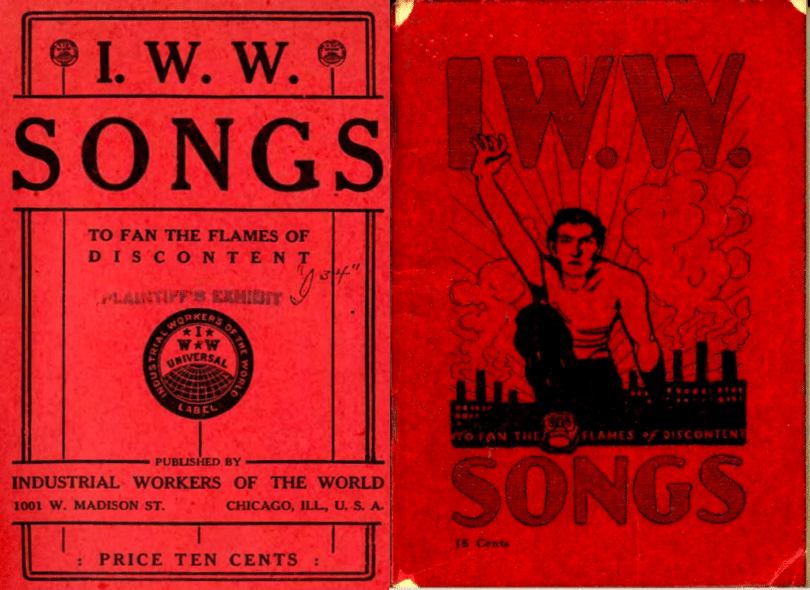
- Labor Movement (Early 1900s): The Industrial Workers of the World (IWW) used “The Little Red Song Book” and songs by Joe Hill, to support labour rights, setting radical lyrics to popular tunes.
The Folk Revival and Civil Rights (1940s–1960s)
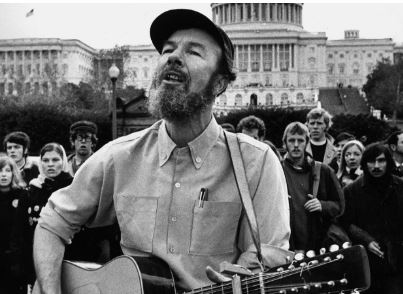
- Woody Guthrie & Pete Seeger: These artists emerged as key figures in the 1940s/50s, using music to advocate for working-class rights.
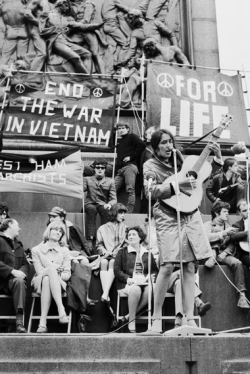
- Civil Rights Movement: In the 1960s, music became deeply intertwined with activism. Activists used spirituals and folk music to gain strength during marches and to highlight racial injustices.
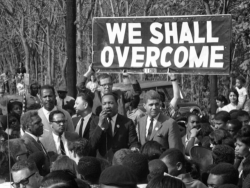
- Iconic Songs: Songs such as “We Shall Overcome” (a ministry song, later adapted by food and tobacco workers striking in Charleston in 1945) were popularized to unify protesters. Sam Cooke’s “A Change is Gonna Come” became an iconic anthem, inspired by personal experiences of discrimination.
Evolution into New Genres (1970s–Present)
- 1970s & 80s: Soul music became a voice for social consciousness, followed by punk, which acted as an outlet for disillusioned youth.
- 80s/90s: The era saw the development of the hardcore scene and socially conscious rap, continuing to highlight issues like police brutality.
- Modern Era: From the 2000s anti-Iraq War movement to modern anti-fascist tunes, protest music continues to be used for social, political, and cultural commentary.
Functions of Protest Music
- Motivation:
- Music provided psychological strength during confrontations, such as in the Civil Rights movement.
- Awareness:
- Songs were used to raise public awareness of issues like the treatment of migrant workers, notably in songs like “Deportee (Plane Wreck at Los Gatos)”, notably, the version by the writer of the song, Woody Guthrie.
- Unification:
- Protest songs serve as a rallying cry, fostering a sense of community among activists.
Key Figures in Protest Music
- Woody Guthrie: Known for his influence on later artists like Bob Dylan.
- Pete Seeger: Instrumental in popularizing anthems of protest.
- Buffy Sainte-Marie: Marked decades of protest for Indigenous (US) rights.
When in Australia in 1985/6, and already a lover of folk music, I was thrilled to purchase in a second-hand shop in Sydney the Newport Folk Festival 1963 album. Featuring artists like Sam Hinton, Mississippi John Hurt, Rambling Jack Elliot, Bob Dylan and The Rooftop Singers. (The 1963 Newport Folk Festival was held at Freebody Park in Newport, Rhode Island. It ran from July 26–28, 1963). I loved the album, but the songs that I particularly enjoyed I have highlighted below in bold, which address folk’s enduring themes of unfaithfulness, heartbreak and unrequited love, killing for having been wronged (in this case over the theft of a hat), the cruel and money-driven boss, the prosperous but exploitative desperado, overcoming oppression, and enjoying life’s pleasures (i.e., ‘Walk Right In’).
- The Barnyard Song – Sam Hinton
- Must I Go Bound – Sam Hinton
- The Arkansas Traveller – Sam Hinton
- See, See Rider – Mississippi John Hurt
- Stagolee – Mississippi John Hurt
- Spikedriver Blues – Mississippi John Hurt
- Coffee Blues – Mississippi John Hurt
- Diamond – Jack Elliott
- Walk Right In – The Rooftop Singers
- UN Canadian Errant – Sylvia
- Woke Up This Morning – The Freedom Singers
- Oh, Freedom – Joan Baez
- Te Ador, Ate’ Amanha – Joan Baez
- Wagoner’s Lad – Joan Baez
- Blowin’ in the Wind – Bob Dylan
- We Shall Overcome – The Freedom Singers
Many songs resonated with me strongly during my early to mid-teens; they include:
Buffy Sainte-Marie: “Universal Soldier” (also sung by Donovan).
Bob Dylan: “With God on Our Side” — I first heard this remarkable song when I was aged 14; it still brings tears to my eyes. Dylan was just 22 years old when he wrote and first performed “With God on Our Side” in early 1963.
Billy Bragg: “Between the Wars” (a brilliant piece of writing) and “Which Side Are You On?” About the ‘84/’85 miners’ strike. As I recall, Billy Bragg borrowed his chorus from Florence Reece’s 1931 song, “Which Side Are You On” which was inspired by the violent 1931 miners’ strike in Kentucky.
Leon Rosselson: “The World Turned Upside Down” (a magnificent piece of writing). Famously sung by Dick Gaughan (and Billy Bragg). It chronicles the 1649 Diggers’ revolt, blending a stirring history of England’s dispossessed commoners fighting oppressive landlords and the propertied with a timeless vision of an egalitarian society living in harmony with the earth.
For more information about Wyn’s publications and music visit:- www.drwynthomas.com